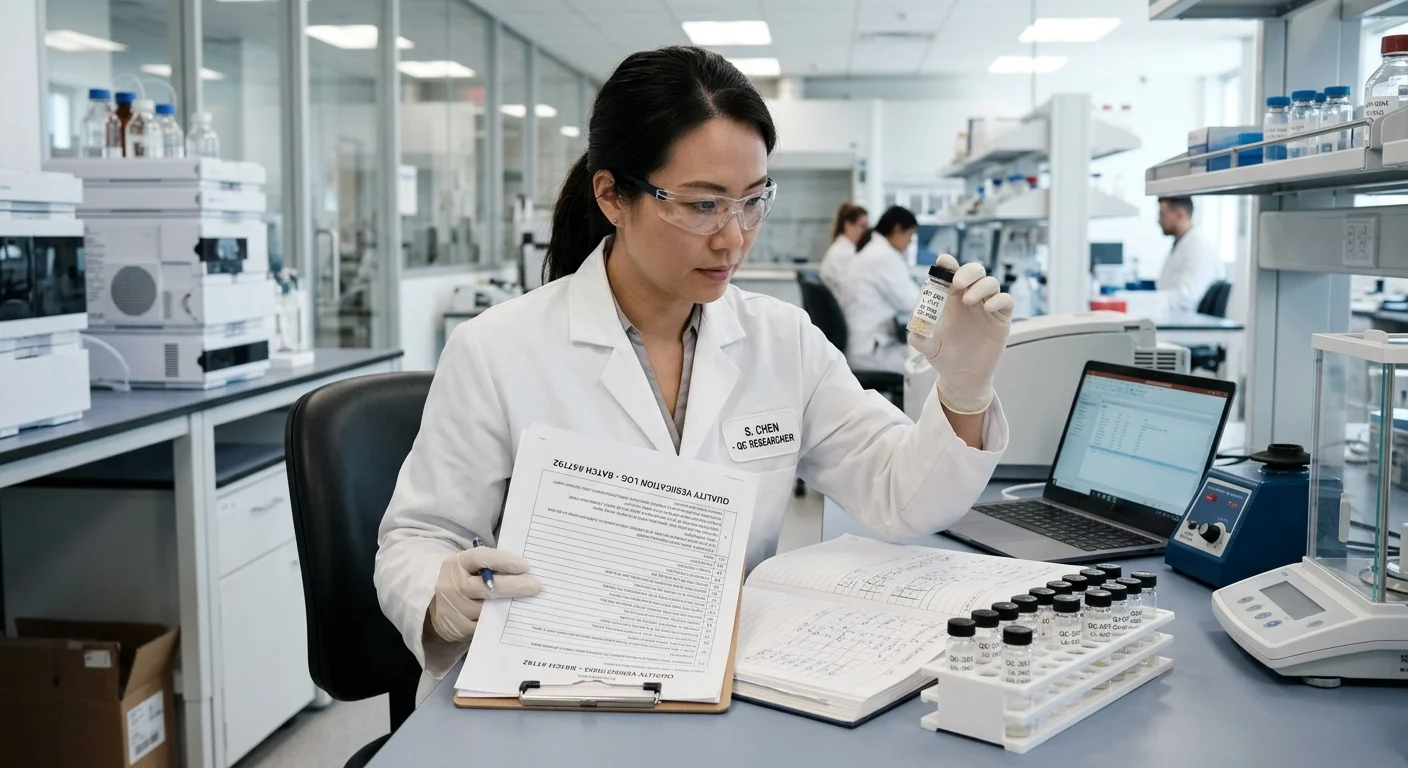
Sourcing research peptides in bulk is a different problem from buying a single vial. When you commit to recurring volume, as a research lab, a reseller, or a white-label operator, a supplier’s marketing page tells you almost nothing. What matters is what survives due diligence. This is the checklist serious wholesale buyers run before signing a recurring supply relationship in 2026. Everything below concerns the procurement of research-use-only laboratory materials; nothing here is guidance for human or veterinary use.
The hard part isn’t finding suppliers. There are dozens, and most of them sound identical: “99% purity,” “third-party tested,” “trusted by labs worldwide.” The hard part is separating the operations that can prove those claims from the ones repeating them because they know buyers expect to hear them. A vetting process is just a structured way to make a supplier show its work, and the ones who can’t are usually the ones you most needed to filter out.
Independent, Per-Batch Certificates of Analysis
The single most important filter. Ask a prospective supplier for the certificate of analysis (COA) of the exact batch you would receive, not a “representative” document from months ago. A COA that doesn’t correspond to the lot in the box is decoration, not verification. There are three things to check:
- Independent lab. The COA should come from a third-party laboratory (for example Janoshik Analytical), not the manufacturer’s own internal QC. A factory grading its own output has an obvious conflict of interest.
- Publicly verifiable. The result should resolve to a record on the testing lab’s own domain. A vendor-hosted PDF can be edited after issuance; a record on the lab’s server can’t be quietly changed by the seller.
- Both purity and identity. HPLC quantifies how much of the sample is the target compound versus impurities. Mass spectrometry confirms the molecule is actually what the label says by matching its molecular weight. A complete COA reports both. Purity alone tells you the sample is clean but not what it is.
A supplier that publishes its full per-batch purity distribution, including the lower numbers, is signaling a different level of operational honesty than one showing a single cherry-picked 99% figure. Distributions are harder to fake than a screenshot, and a vendor willing to show its weaker batches is a vendor that isn’t hiding them.
The single-COA-for-everything red flag
This one deserves its own callout because it’s the most common trick and the easiest to miss. A weak supplier hosts one good-looking COA and links it from every product page and every order. The certificate is real. The lab is real. The purity figure is genuine. None of that helps you, because the document has nothing to do with the lot that arrives at your door. The whole point of a COA is that it’s matched to a batch, same compound, same lot code, same date window. If the certificate you’re shown is dated last year and carries no batch identifier, or if it’s identical across three different products, you’re looking at marketing dressed up as testing. This is why match-batch is the concept that actually matters, not “third-party tested” as a slogan.
How to Read a COA in Two Minutes
You don’t need to be an analytical chemist to read a certificate. You need to know which fields carry weight and which are filler. Here’s the quick pass:
- Compound name and sequence. Confirm it matches what you ordered. Sounds obvious, but mislabeled or transposed sequences do show up.
- Batch or lot number. This should appear on both the COA and the vial. If they don’t match, the document doesn’t describe your material.
- HPLC purity figure. For research-grade material, 98% is a common baseline and premium lots run 99% and up. Anything under about 95% is usually treated as a red flag in the research-supply space. Look at the chromatogram if it’s included, a clean main peak with small side peaks is what you want to see.
- Mass spec result. The reported molecular weight should match the expected value for that peptide. This is the identity check; without it you have a purity number for an unconfirmed substance.
- Issuing lab and date. A named independent lab and a date that lines up with your batch’s production window. A certificate older than the vial is a problem.
A few things people expect to see on a COA but usually won’t: endotoxin and sterility results, and heavy-metal screens. These are separate, additional tests, not part of a standard purity-and-identity COA. Endotoxin and sterility testing matter for certain sensitive research applications and are run as their own assays. If a supplier claims a single HPLC COA proves a product is “sterile” or “endotoxin-free,” that’s a misunderstanding of what the document shows, or a deliberate overstatement. Purity, quantity, and sterility are three different questions answered by three different methods, and conflating them is itself a signal about how much the seller actually knows.
Good COA practice vs. weak COA practice
A useful way to compress all of this: weak COA practice is a generic, vendor-hosted, undated PDF reused across products, showing a purity number with no chromatogram, no mass spec, and no lot code. Good COA practice is a batch-specific certificate from a named independent lab, verifiable on that lab’s own site, dated to the production run, reporting both HPLC purity and mass-spec identity, with a lot code that matches the vial in your hand. Everything between those two poles is a judgment call, but you should know which end a supplier sits closer to before you commit volume.
Batch Consistency Over Time
For reproducible research and for resellers protecting their own reputation, consistency matters more than a single high number. Ask for COAs across several recent batches of the same compound. Tight clustering (e.g. every batch ≥98–99%) indicates a controlled upstream source. Wild swings indicate the supplier is buying opportunistically from whoever is cheapest that quarter. A vendor that hit 99% once and 94% three times isn’t a 99% vendor; it’s a coin flip, and your reorders are the bet.
Minimum Order Quantity and Pricing Transparency
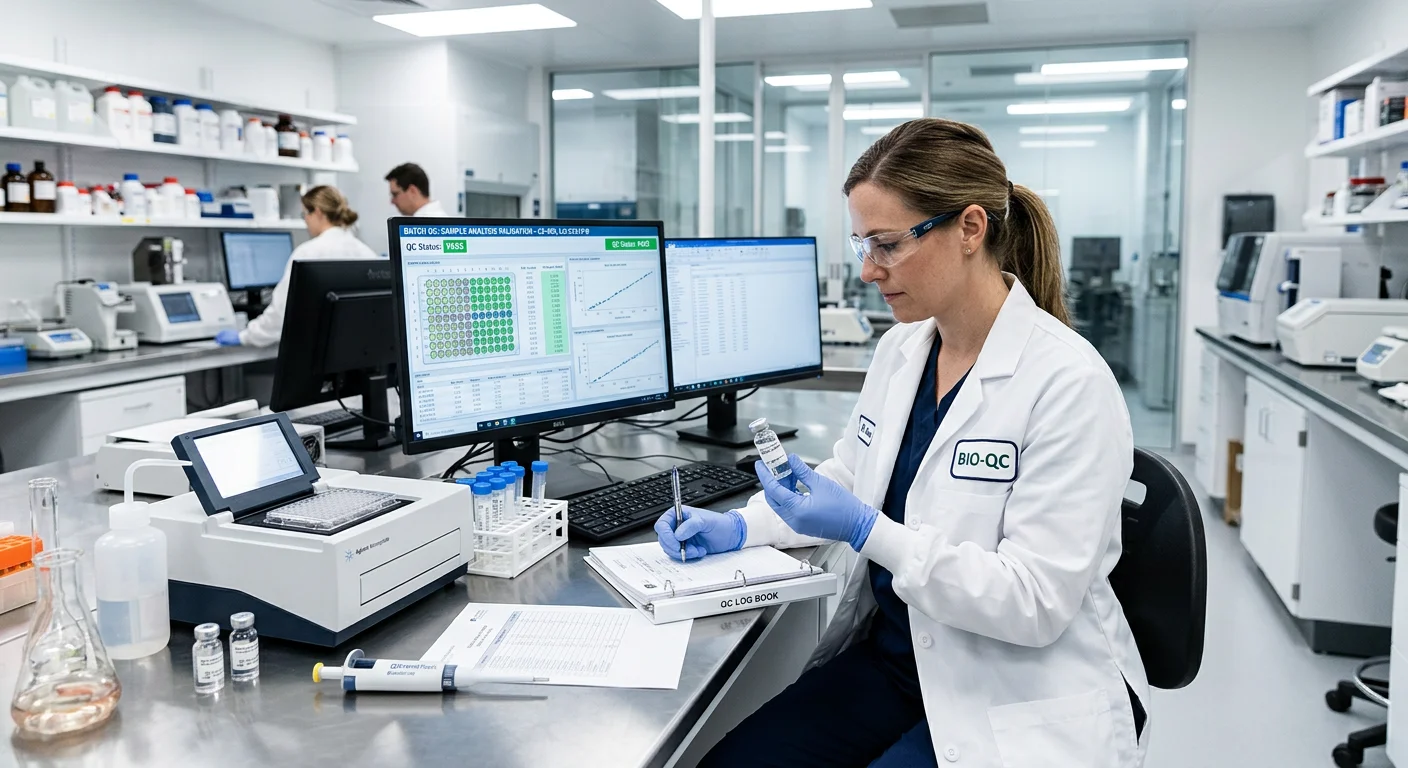
A genuine wholesale operation states its MOQ and pricing structure plainly. Quote-based pricing is normal at volume, but the supplier should be able to tell you the entry MOQ and how price scales with quantity without a sales runaround. Hidden, ever-shifting pricing is a red flag for an aggregator with an unstable cost base. If the price changes every time you ask, the supplier doesn’t control its own supply, and that instability will eventually land on your timeline and your margins.
Fulfillment Reliability and Cross-Border Policy
At volume, a single seized or lost shipment is expensive. The supplier’s policy on intercepted shipments is one of the largest determinants of whether a wholesale relationship is viable:
- Do they reship customs-detained orders at no cost, or push the loss back to you?
- What are realistic lead times at your order size?
- Do they ship to your jurisdiction reliably (e.g. US + Canada with reship coverage)?
A clean reship policy is the supplier absorbing operational risk you’d otherwise carry on every order. The math is simple: a vendor that reships eats the occasional loss as a cost of doing business; a vendor that doesn’t is quietly transferring that cost to you on every single shipment, whether or not anything goes wrong. Over a recurring relationship, that difference compounds.
Payment Red Flags
How a supplier wants to be paid tells you how it thinks about the relationship. Wholesale payment differs from retail. Understand accepted methods, whether terms are available for established accounts, and how refunds or replacements are handled on a bulk order. Clarity here prevents disputes later. A few patterns are worth treating with caution:
- Irreversible-only payment with no alternative. Some payment rails are normal in this space, but a seller that only accepts methods offering you zero recourse, and refuses to discuss replacements, is structuring things in its own favor.
- Pressure to pay outside any documented channel. Off-platform, “just send it here this once” requests remove every protection you’d otherwise have.
- No written replacement or refund policy. If you can’t get the terms in writing before you pay, you won’t get them after something goes wrong.
- Large MOQ plus prepayment plus a brand-new, traceless operation. Any one of these is fine on its own. All three together, with no batch history and no verifiable COAs, is a profile worth slowing down on.
Cold-Chain and Storage Handling
Lyophilized peptides are stable, but transit conditions still matter for sensitive compounds. Ask how material is packaged and whether temperature-sensitive items are handled accordingly. A supplier that can speak precisely about lyophilization, storage, and reconstitution is one that understands the product. Vague answers here often correlate with vague answers everywhere else.
Catalog Depth vs. Depth of Verification
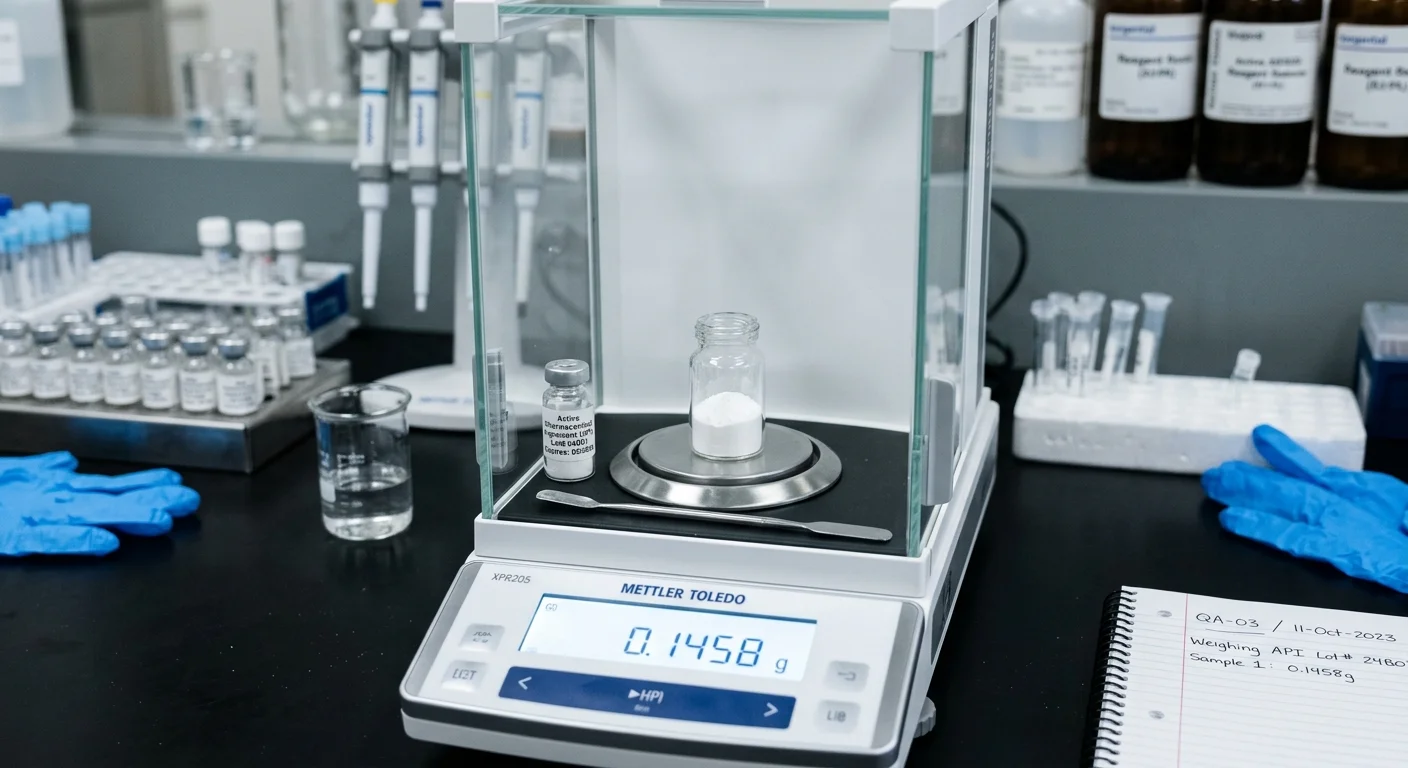
A 100+ SKU catalog looks impressive but often means thin verification and unpredictable stock. For recurring procurement, a narrower catalog where every SKU has a verified batch in stock is usually more valuable than breadth you can’t rely on. Decide which model fits your needs before being dazzled by listing count. A list of 200 compounds means little if only forty are actually in stock and only a handful have current, matched COAs behind them.
White-Label / Private-Label Capability (If Relevant)
If you intend to resell under your own brand, confirm whether the supplier offers private labeling, what the MOQ for it is, and whether each labeled batch still carries its independent COA. The verification chain should not break just because your logo is on the vial. The risk is subtle: some operations test their house-brand material but quietly skip verification on private-label runs, which means you’re putting your name on lots nobody independently checked.
Payment Terms That Match B2B Reality
Wholesale payment differs from retail. Understand accepted methods, whether terms are available for established accounts, and how refunds or replacements are handled on a bulk order. Clarity here prevents disputes later.
Questions to Ask Before You Commit
If you only have one conversation with a prospective supplier, these are the questions that surface most of what you need to know. Honest answers are more telling than impressive ones:
- Can you send me the COA for the specific batch I’d receive, not a representative one?
- Which independent lab issues your COAs, and can I verify the result on that lab’s own site?
- Can I see purity figures across your last several batches of this compound?
- What’s your MOQ, and how does price move as volume scales?
- What happens if a shipment is detained or lost in customs?
- What’s your written policy on replacements and refunds for a bulk order?
- For private label, does each labeled batch still carry its own independent COA?
- What can’t you guarantee? A supplier honest about its limitations is usually honest about the rest.
That last question does real work. Every operation has constraints, lead-time variance, jurisdictions it can’t reach, compounds it doesn’t stock consistently. A supplier that names them is one you can plan around. A supplier that claims none exist is either inexperienced or selling you a story.
The Short Version
Independent per-batch COAs that you can verify yourself, consistent results over time, transparent MOQ and pricing, a reship-backed fulfillment policy, and verification that survives private labeling. A supplier that clears all of these is rare, which is exactly why vetting pays off before you commit recurring volume.
Bastion supplies research compounds wholesale with per-batch Janoshik verification and US + Canada reship coverage. We’re also upfront about what that does and doesn’t cover, because the point of this whole exercise is to reward suppliers who’ll show you the unflattering details too. See the wholesale program for MOQs and to request a quote.
For research use only. Bastion Peptides supplies compounds intended for laboratory and in-vitro research. Not for human or veterinary consumption.