Research use only. The compounds discussed here: semaglutide, tirzepatide, and retatrutide, are sold strictly as reference materials for in-vitro and laboratory research. Nothing on this page is medical advice, a dosing protocol, or a statement of human efficacy. It summarises how the published literature characterises these molecules at the receptor level.
The short version
All three are incretin-based peptides studied in metabolic research, but they are not interchangeable. The simplest way the literature distinguishes them is by how many receptors they engage:
- Semaglutide: a single-receptor GLP-1 receptor agonist.
- Tirzepatide: a dual agonist at the GIP and GLP-1 receptors.
- Retatrutide: a triple agonist at the GIP, GLP-1, and glucagon (GCGR) receptors.
That escalating receptor profile is the single most important difference for researchers selecting a reference compound. Everything below expands on it.
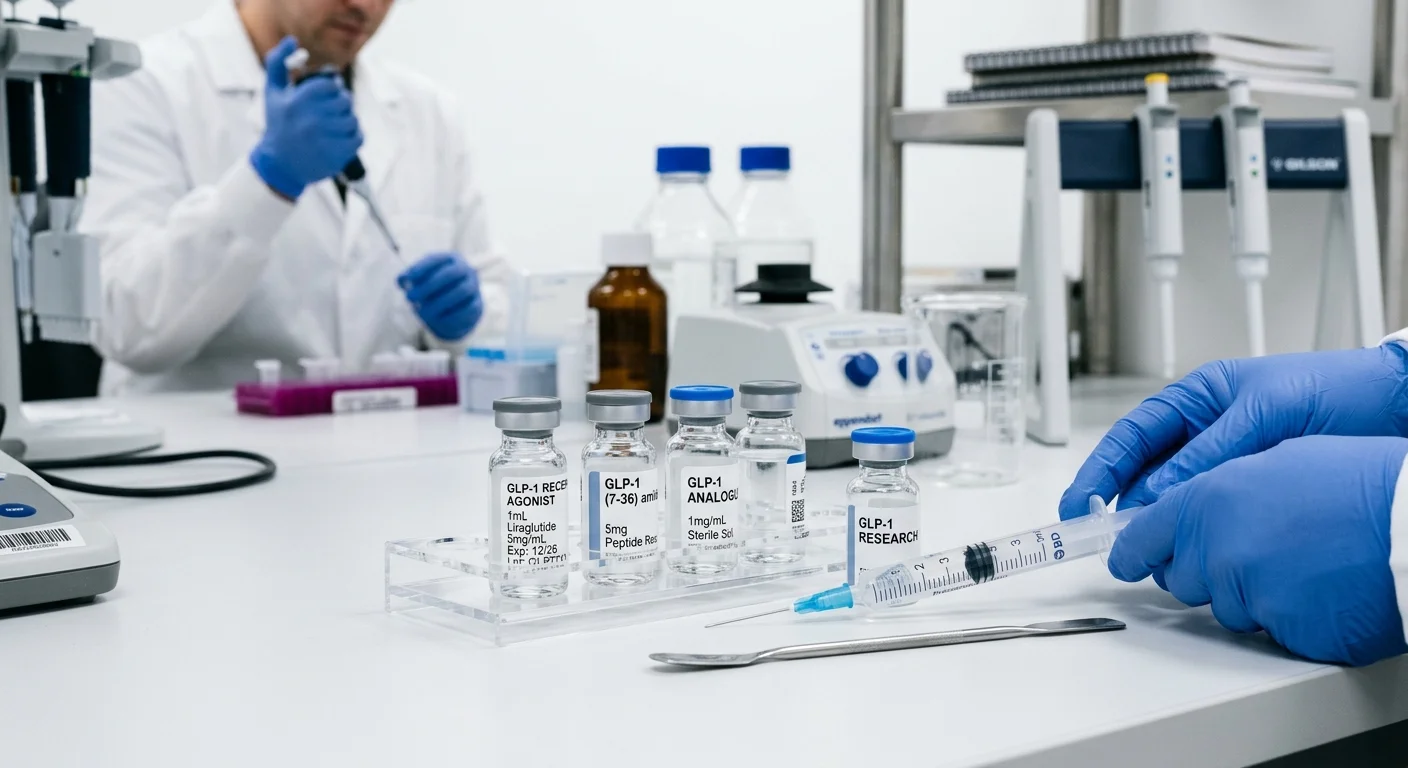
What “GLP-1 research peptide” means
Glucagon-like peptide-1 (GLP-1) is an incretin hormone. In the literature, GLP-1 receptor agonists are studied for their interaction with incretin signalling pathways. “GIP” (glucose-dependent insulinotropic polypeptide) is a second incretin receptor, and “GCGR” is the glucagon receptor.
The newer research peptides are characterised by how many of these pathways a single molecule activates: mono-, dual-, or tri-agonism. Understanding which receptors a compound targets is what lets a research design isolate the variable being studied.
Semaglutide: the single-receptor reference point
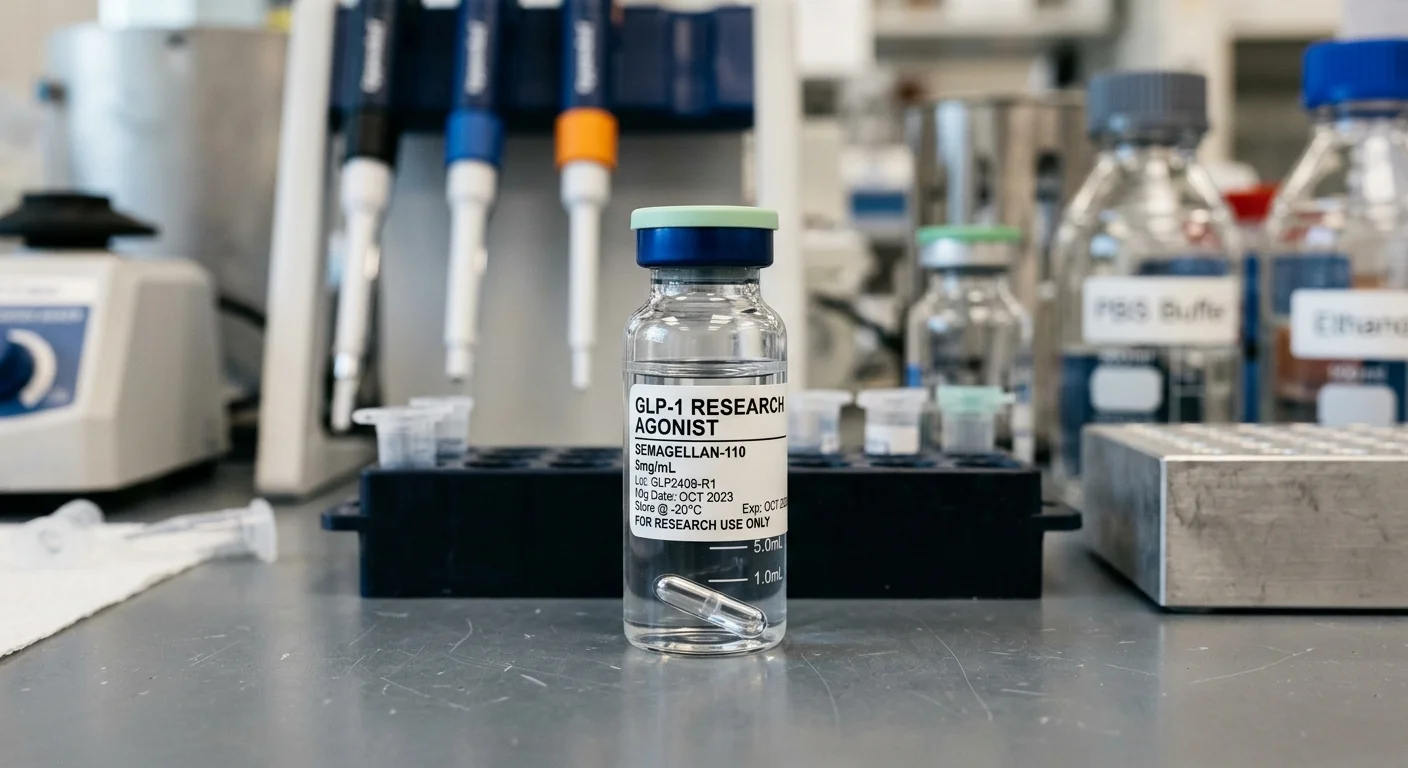
Semaglutide is described in the literature as a long-acting GLP-1 receptor agonist, a structurally modified analog of native GLP-1 designed for extended half-life. As the most-studied of the three, it is frequently used as the comparator or baseline in incretin research.
If a study needs a well-characterised single-pathway GLP-1 reference, semaglutide is typically that anchor.
Bastion lists semaglutide as a 5 mg research vial; the current batch has not yet completed independent Janoshik HPLC testing — check the lab results page for current verification status.
Tirzepatide: adding the GIP receptor
Tirzepatide is characterised as a dual GIP/GLP-1 receptor agonist: a single peptide engineered to engage both incretin receptors at once. In research terms, it is the compound used to study what happens when GIP signalling is added on top of GLP-1 signalling, rather than either alone.
That co-agonism is the reason it cannot be treated as a stronger version of semaglutide. It is acting on an additional pathway, not just more of the same one. When we audit a new tirzepatide batch, we check the molecular weight confirmation first since any degradation would compromise the dual-receptor binding profile that defines this compound.
Bastion lists tirzepatide as 10-vial research kits in 5 mg, 10 mg, and 30 mg per-vial strengths.
Retatrutide: adding the glucagon receptor
Retatrutide is described as a triple agonist at the GIP, GLP-1, and glucagon (GCGR) receptors. It is the most recently characterised of the three and represents the tri-agonist frontier in published incretin research, where the glucagon-receptor arm is added to the dual mechanism.
Because it touches three pathways, it is the compound of interest where a research design specifically wants to study combined incretin-plus-glucagon receptor engagement. The complexity here is real: triple-receptor engagement creates interaction effects that single or dual agonists cannot replicate.
Bastion lists retatrutide as 10-vial research kits in 5 mg, 10 mg, and 30 mg per-vial strengths.
Quick comparison: the head-to-heads
The matchups researchers ask about most, tirzepatide vs semaglutide (dual vs single receptor) and retatrutide vs tirzepatide (triple vs dual agonist), come down to how many incretin pathways each engages. The receptor-by-receptor breakdown is in the table below.
Side-by-side: receptor profile
| Compound | GLP-1 R | GIP R | GCGR (glucagon) | Literature label |
|---|---|---|---|---|
| Semaglutide | ✓ | ✗ | ✗ | GLP-1 mono-agonist |
| Tirzepatide | ✓ | ✓ | ✗ | GIP/GLP-1 dual agonist |
| Retatrutide | ✓ | ✓ | ✓ | GIP/GLP-1/GCGR triple agonist |
This table summarises receptor targets as reported in the literature. It is not a comparison of potency, outcomes, or suitability for any use. Those questions are not established here (see below).
How researchers choose between them
Selection in a research context follows the question, not a ranking:
- Studying GLP-1 signalling in isolation? Semaglutide is the clean single-variable reference.
- Studying incretin co-agonism (GIP + GLP-1)? Tirzepatide isolates that combination.
- Studying tri-agonism including the glucagon receptor? Retatrutide is the compound that adds the third arm.
For a protocol that needs more than one, the GLP-1 starter set groups the entry strengths together. The full incretin range, including AOD9604, is listed on the metabolic research peptides category page.
Approximate half-life characteristics in published research
Half-life directly affects experimental design: a longer-acting compound stays active in a system longer, which changes dosing intervals, washout periods, and how researchers time their measurements. Across publications characterising these three compounds:
- Semaglutide is described with an extended half-life attributed to albumin binding, fatty acid chain modifications, and resistance to DPP-IV degradation, making it useful in protocols that require sustained GLP-1 receptor engagement over multiple days.
- Tirzepatide carries a similar extended half-life profile, enabled by a fatty diacid tether, with both GIP and GLP-1 receptor activity persisting through the washout window.
- Retatrutide has been characterised in early publications with a comparable extended profile, though its half-life data remains less extensive than the other two given its more recent introduction to the literature.
These are compound characteristics, not dosing recommendations. Researchers should consult primary literature for specific half-life values relevant to their model system.
Storage conditions for lyophilised research peptides
All three compounds ship as lyophilised powder. Prior to reconstitution, they are best stored at -20°C in a sealed vial away from light and humidity. Repeated freeze-thaw cycles degrade structural integrity; aliquot before freezing if a batch will be accessed multiple times. Once reconstituted, refrigerate at 4°C and use within the timeframe stated in the batch documentation. These are standard handling conditions for research-grade lyophilised peptides and apply equally to all three compounds.
What the literature does NOT establish here
To keep this accurate: this page does not make, and the underlying receptor pharmacology does not by itself support, any claim about human dosing, safety, weight outcomes, or therapeutic comparison. Those questions belong to controlled clinical research and regulatory review, not to a reference-material overview.
Treat all three strictly as laboratory research compounds, handled accordingly.
Handling and reconstitution
All three ship as lyophilised powder and must be reconstituted before any laboratory work. Reconstitution volume drives the concentration per unit, so it should be calculated rather than estimated. Our peptide reconstitution guide includes a calculator and step-by-step handling notes.
Verifying what you receive
Independent Janoshik HPLC testing status is tracked per batch — you can see the full archive, including current verified vs. pending status per compound, on the lab results page.
In our experience reviewing hundreds of COA documents, the most reliable vendors publish the actual certificate that ships with your specific batch, not a generic “representative” result. Every task ID resolves on Janoshik’s own domain, so the results are independently checkable before checkout.

Frequently asked questions
What is the main difference between semaglutide, tirzepatide, and retatrutide?
The number of receptors each engages. Semaglutide is a GLP-1 mono-agonist, tirzepatide is a GIP/GLP-1 dual agonist, and retatrutide is a GIP/GLP-1/glucagon triple agonist. That receptor profile is the defining distinction in the literature.
Is retatrutide just a stronger version of semaglutide?
No. Retatrutide acts on additional receptors (GIP and glucagon) that semaglutide does not target at all, so it is a different mechanism rather than a higher dose of the same one.
Which one should a research protocol use?
It depends on the pathway being studied: semaglutide for GLP-1 alone, tirzepatide for GIP+GLP-1 co-agonism, retatrutide for tri-agonism that adds the glucagon receptor. The page above breaks this down.
Do these come ready to use?
No. They ship as lyophilised powder for research and must be reconstituted first. See the reconstitution guide linked above.
How do I verify the purity of the batch I receive?
Verified compounds are published with an independent Janoshik HPLC certificate and public verify link on Janoshik’s own domain. Compounds pending testing on the current batch are listed as such on the lab results page.
Are these for human or clinical use?
No. They are sold strictly as research-use-only reference materials and are not intended for human or veterinary use, diagnosis, or treatment.
Summary
Read the three as a ladder of receptor engagement: semaglutide (GLP-1), tirzepatide (+GIP), retatrutide (+glucagon). Choose the reference compound that matches the pathway your research isolates, reconstitute it correctly, and confirm the batch against its published Janoshik certificate before you begin.
Related research guides
- Growth hormone secretagogues: GHRH analogs vs GHRPs
- Longevity research peptides: Epithalon, NAD+, MOTS-c & Pinealon
- DSIP (Delta Sleep-Inducing Peptide) research guide
- CJC-1295: DAC vs No DAC
- BPC-157 + TB-500 recovery stack
Sourcing & verification: Verified Bastion lots ship with an independent Janoshik match-batch COA you can verify yourself; compounds still pending testing are listed as such on the lab results page. Current availability: Semaglutide 5mg (research use only, verification pending).
Research Use Only. Not for human consumption.
See our affiliate program.