Overview
Lyophilized (freeze-dried) peptides require reconstitution before use in research applications. Proper reconstitution technique preserves peptide integrity, ensures accurate concentration, and extends usable shelf life. This protocol applies to research-grade lyophilized peptides supplied in standard vials.
Materials Required
- Lyophilized peptide vial (stored at −20°C; allow to warm to room temperature before opening)
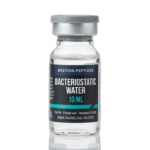
- Bacteriostatic water (0.9% benzyl alcohol) — preferred for multi-use vials
- Sterile water for injection — for single-use reconstitution only
- Sterile insulin syringe (1 mL, 28–31 gauge)
- Alcohol swabs
- Permanent marker for labeling
Solvent Selection
Bacteriostatic water (BW) contains 0.9% benzyl alcohol as a preservative, inhibiting microbial growth in reconstituted solutions. It is the standard solvent for research peptides stored in multi-draw vials and extends post-reconstitution stability to 3–6 weeks at 4°C depending on the peptide.
Sterile water for injection (SWFI) contains no preservatives and is appropriate when a single-use reconstitution is planned or when benzyl alcohol may interfere with the assay. Post-reconstitution stability is shorter — typically 24–48 hours at 4°C or up to 1 week frozen.
Acetic acid solution (0.1–1% in sterile water) is required for peptides that are poorly water-soluble or that aggregate at neutral pH. IGF-1 LR3 and some growth factors require dilute acetic acid for initial reconstitution before diluting to working concentration in buffer.
Step-by-Step Reconstitution Protocol
- Allow the lyophilized vial to reach room temperature (15–20 minutes from −20°C storage). Do not open a cold vial — condensation introduces moisture and risks contamination.
- Wipe the vial septum with an alcohol swab. Allow to air-dry 10 seconds.
- Draw the calculated volume of solvent (bacteriostatic water or appropriate solvent) into an insulin syringe.
- Insert the needle through the septum at a slight angle. Direct the solvent stream against the glass wall of the vial — do not inject directly onto the lyophilized powder cake, which can cause foaming and aggregation.
- Gently swirl the vial in circular motions for 30–60 seconds. Do not vortex or shake. Some peptides (TB-500, larger MW compounds) may require 2–3 minutes of gentle swirling.
- Inspect visually: the solution should be clear and colorless (or very faintly yellow). Cloudiness may indicate aggregation — rewarm to room temperature and swirl again before discarding.
- Label the vial with peptide name, concentration (mg/mL), solvent, reconstitution date, and initials.
Concentration Calculation
Concentration (mg/mL) = Vial content (mg) ÷ Volume of solvent added (mL). Example: a 5mg vial reconstituted with 2.5 mL bacteriostatic water yields a 2 mg/mL solution. For a 10mg vial with 2 mL solvent: 5 mg/mL. Adjust solvent volume based on the target working concentration required for the research protocol.
Common Errors
| Error | Consequence | Prevention |
|---|---|---|
| Vortexing the vial | Aggregation, denaturation | Gentle swirling only |
| Injecting solvent onto powder | Foaming, incomplete dissolution | Direct stream against glass wall |
| Opening cold vial | Moisture contamination | Allow to reach room temperature first |
| Using expired bacteriostatic water | Reduced preservative efficacy | Check expiry before use |
| Storing reconstituted peptide warm | Degradation, loss of potency | Refrigerate at 4°C immediately after reconstitution |
Research Disclaimer: All protocols described are intended for qualified laboratory researchers working with research-grade peptides. This content does not constitute medical advice. Bastion Peptides products are for research purposes only and are not approved for human use or therapeutic application.