Overview
Proper storage is critical to maintaining peptide integrity and research validity. Degraded peptides produce unreliable data and can compromise entire experimental series. This guide covers storage requirements for both lyophilized (dry) and reconstituted research peptides by compound class.
Lyophilized Peptide Storage
Lyophilized peptides are significantly more stable than reconstituted solutions. Most research peptides supplied as lyophilized powder are stable at −20°C for 24–36 months when kept sealed and dry. Short-term storage at 4°C (up to 3 months) is acceptable for most compounds but should be avoided for light-sensitive peptides (Melanotan II, GHK-Cu) and oxidation-sensitive sequences.
Key principles for lyophilized storage:
- Keep sealed until use — moisture is the primary degradation vector for dry peptides
- Store in a desiccated environment if possible (vacuum-sealed bag with silica gel)
- Never store lyophilized peptides in frost-free freezers — the freeze-thaw cycling degrades powder
- Allow vials to reach room temperature before opening to prevent condensation
Reconstituted Peptide Storage
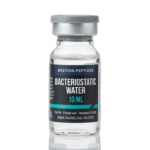
Reconstituted peptide stability depends on the compound, solvent (bacteriostatic water vs sterile water), and storage temperature. The table below provides general guidance by storage condition:
| Storage condition | With bacteriostatic water | With sterile water (no preservative) |
|---|---|---|
| 4°C (refrigerator) | 3–6 weeks (compound-dependent) | 24–72 hours |
| −20°C (freezer) | 3–6 months | 1–3 months |
| Room temperature | Not recommended (>4 hours) | Not recommended (>2 hours) |
Light Sensitivity
Several research peptides are susceptible to UV-induced degradation:
- Melanotan II: Contains tryptophan (Trp) residue highly sensitive to UV oxidation. Store in amber vials or foil-wrapped containers. Reconstitute under reduced-light conditions.
- GHK-Cu (Copper Peptide): Copper complexation is light-sensitive. Store reconstituted solution in opaque or amber containers.
- PT-141 (Bremelanotide): Moderate light sensitivity — amber storage recommended for reconstituted solution.
- DSIP, Thymosin Alpha-1, and BPC-157: Standard laboratory lighting acceptable; avoid prolonged direct sunlight exposure.
Freeze-Thaw Limits
Repeated freeze-thaw cycles cause ice crystal formation that damages peptide structure and promotes aggregation. As a general rule, limit reconstituted peptide freeze-thaw cycles to a maximum of 3. For high-value or low-volume preparations, aliquot reconstituted solutions into single-use fractions immediately after reconstitution and store aliquots at −20°C. Thaw only what is needed for each experimental session.
CJC-1295 with DAC is particularly sensitive to freeze-thaw cycling at the maleimide-albumin linkage site — treat DAC-modified peptides as single-use per vial once reconstituted where feasible.
Stability Reference by Compound
| Compound | Reconstituted (4°C/BW) | Special consideration |
|---|---|---|
| BPC-157 | 3 weeks | Standard |
| TB-500 | 4 weeks | Gentle swirling 2–3 min to dissolve |
| Semaglutide | 4–6 weeks | May yellow slightly — normal |
| CJC-1295 with DAC | 4 weeks | Limit freeze-thaw; DAC sensitive |
| Melanotan II | 3–4 weeks | Protect from light strictly |
| GHK-Cu | 2–3 weeks | Amber storage, avoid EDTA buffers |
| IGF-1 LR3 | 3 weeks (acetic acid) | Reconstitute in 10mM HCl or 0.1% acetic acid |
Research Disclaimer: All protocols described are intended for qualified laboratory researchers working with research-grade peptides. This content does not constitute medical advice. Bastion Peptides products are for research purposes only and are not approved for human use or therapeutic application.