Research-use-only (RUO) notice: This article is an educational reference intended for laboratory and research professionals. AOD-9604 is supplied and described here strictly for in vitro and non-human research applications. Nothing on this page is medical advice, a therapeutic claim, or a recommendation for human or veterinary use, and no human dosing protocol is provided or implied. References to physiological processes describe findings reported in preclinical and laboratory models, not established human outcomes. Researchers are responsible for compliance with all applicable institutional, local, and national regulations governing the acquisition, handling, and study of research peptides.
What AOD-9604 Is
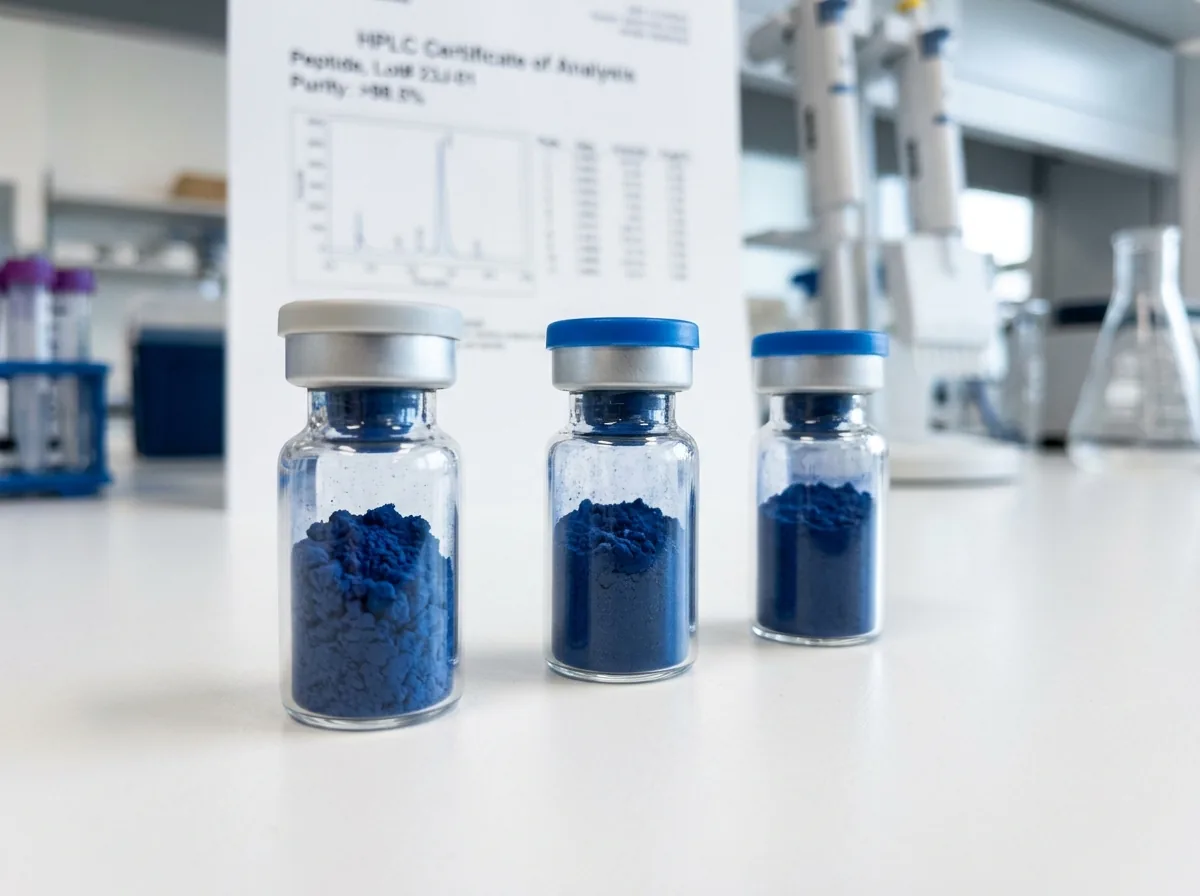
AOD-9604 is a synthetic peptide derived from the C-terminal region of human growth hormone (hGH). Specifically, it corresponds to the amino acid sequence at residues 176–191 of the intact hormone, with one deliberate modification: an additional tyrosine residue attached at the N-terminus. The name AOD is shorthand for “anti-obesity drug,” reflecting the original research program that produced it, and the “9604” designates the specific candidate compound within that line of investigation.
The design rationale is the most important thing to understand about this molecule. Intact growth hormone is a large, multifunctional protein. Among its many activities, it promotes longitudinal growth and anabolic processes, raises circulating insulin-like growth factor 1 (IGF-1), and influences carbohydrate and lipid metabolism. Decades of structure–function work indicated that these activities aren’t uniformly distributed across the molecule. Different regions of hGH appear to carry different portions of its biological repertoire. Researchers identified the C-terminal segment as the region most closely associated with the hormone’s effect on fat metabolism.
AOD-9604 was constructed to isolate that lipid-metabolising portion of the growth hormone molecule and study it on its own, separated from the growth-promoting and IGF-1–raising portions. In other words, the peptide is a research tool built to ask a focused question: can the fat-metabolism activity attributed to the C-terminal fragment be reproduced by the fragment alone, without invoking the rest of growth hormone’s signalling? The N-terminal tyrosine addition is a stabilising modification intended to improve the fragment’s handling and durability relative to the native, unmodified sequence.
Mechanism and Pharmacology
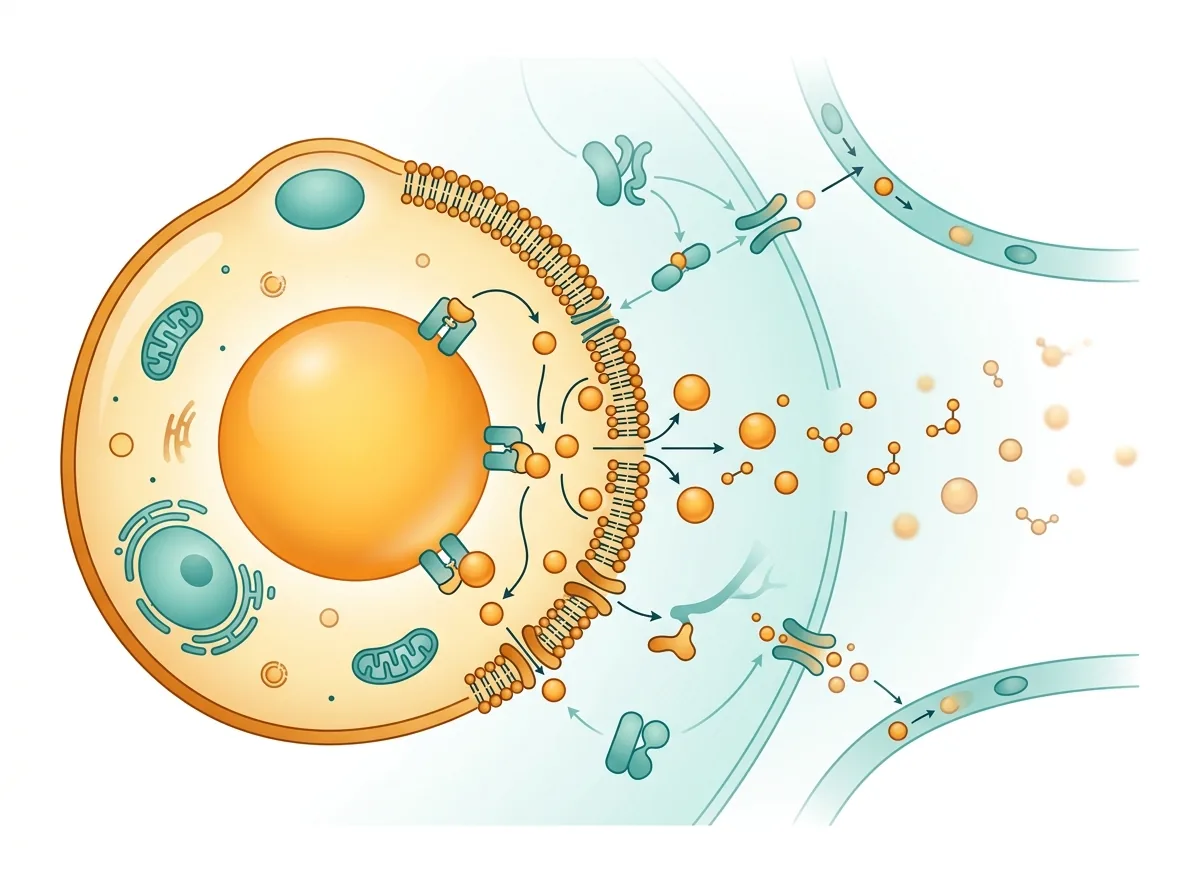
In laboratory and animal models, AOD-9604 has been reported to influence adipose tissue in two complementary directions: stimulating lipolysis (the breakdown of stored triglycerides) and inhibiting lipogenesis (the formation and accumulation of new fat). The combination, pushing fat breakdown up while pushing fat synthesis down, is the metabolic signature that defines the compound’s research interest.
The central pharmacological claim, and the reason the molecule exists, is that these reported effects on fat metabolism appear in models without the hallmark activities of intact growth hormone. In the reported literature, AOD-9604 does not produce the elevation in IGF-1 that characterises growth hormone signalling through the GH receptor, and it is described as not exerting the effects on blood glucose and insulin sensitivity that accompany intact GH administration. This separation, lipid-metabolism activity decoupled from the growth axis and from glucose handling, is the entire conceptual basis for studying the fragment instead of the whole hormone.
Mechanistically, the way AOD-9604 is reported to act differs from how growth hormone works. Rather than driving the canonical GH-receptor pathway that culminates in IGF-1 output, research on the fragment has pointed toward effects on adipocyte metabolism that include modulation of β3-adrenergic receptor signalling and the enzymatic machinery governing fat storage and release. Investigators have described both acute lipolytic activity and longer-term changes in the expression of fat-metabolism components in adipose tissue. The key conceptual point for a research audience is that the fragment is studied as functionally separable from the growth-promoting arm of GH biology. That hypothesis, rather than any settled clinical conclusion, is what the molecule is designed to interrogate.
What the Research Investigates
Two broad research areas dominate the published interest in AOD-9604.
Fat metabolism and obesity models
The original and best-known research direction concerns fat metabolism. Preclinical work explored whether the C-terminal fragment could reproduce the lipid-mobilising activity attributed to growth hormone while leaving the growth and IGF-1 axis untouched. In animal and cell-based models, reported outcomes have generally supported the lipolytic and anti-lipogenic profile described above, which is why the compound advanced into human investigation in the first place.
It is essential to state honestly what happened next: human clinical results have been mixed and have not conclusively demonstrated the weight-reduction benefit that the preclinical rationale suggested. The translation from promising laboratory signals to a strong, reproducible clinical effect on body weight in humans wasn’t cleanly achieved, and the compound didn’t become an established obesity therapeutic on the strength of those trials. A serious research reference must present this plainly rather than implying that the early mechanistic promise was confirmed in people. The disconnect between model-level activity and clinical endpoints is itself part of what makes the molecule scientifically interesting and a reason it continues to be referenced in metabolic research discussions.
Cartilage and joint research
A second, narrower line of investigation has examined AOD-9604 in the context of cartilage and osteoarthritis-related research. This work is distinct from the fat-metabolism program and explores whether the peptide has properties relevant to cartilage biology in experimental settings. This area is less developed than the metabolic literature and should be understood as exploratory rather than established.
AOD-9604 vs Full Growth Hormone vs GH Secretagogues
AOD-9604 is frequently grouped with growth-hormone–related compounds, so it’s worth drawing the distinctions precisely. They sit at completely different points in GH biology.
- Full growth hormone (intact hGH). The complete 191-amino-acid protein carries the entire repertoire of GH activity: growth promotion, anabolic signalling, IGF-1 elevation, and effects on glucose and lipid metabolism. It acts through the growth hormone receptor and drives the full downstream cascade, including the IGF-1 output that AOD-9604 is reported to lack.
- GH secretagogues. Compounds in the secretagogue category (the class discussed in our growth hormone secretagogues guide) don’t supply growth hormone activity directly. Instead, they are studied for their ability to prompt the body’s own release of growth hormone, typically via the ghrelin/GH-secretagogue receptor or GHRH-related pathways. Because they work by encouraging endogenous GH output, they tend to be associated with downstream GH effects, including IGF-1 changes. That’s the opposite of the separation AOD-9604 was built to achieve.
- AOD-9604. The fragment is neither growth hormone nor a secretagogue. It is a defined sub-portion of the hormone studied specifically to isolate the fat-metabolism activity from the growth and IGF-1 axis. It is not reported to act as a GH agonist in the conventional sense and is not described as raising IGF-1.
Why does the distinction matter for a research program? Because the experimental question each addresses is different. Secretagogues probe the regulation of GH release; intact hGH probes the full physiology of the hormone; AOD-9604 probes a hypothesis about whether one specific function can be dissociated from the rest. Conflating them obscures the variable each model is meant to test. Researchers comparing metabolic peptides may also encounter the separate and distinct class covered in our GLP-1 research peptides overview; those compounds act through an entirely different incretin-based mechanism and are not interchangeable with GH-fragment research tools.
What the Literature Does NOT Establish
For a responsible RUO reference, the boundaries of the evidence are as important as the evidence itself. The following points describe what the published record does not support:
- Human weight-loss efficacy is not established. Despite the lipolytic and anti-lipogenic activity reported in models, human clinical investigation did not conclusively confirm a meaningful, reproducible weight-reduction effect. The compound should not be described as a proven fat-loss agent in people.
- The clinical picture is mixed, not positive. Trial outcomes have been inconsistent, and the gap between preclinical promise and clinical confirmation remains a defining feature of the molecule’s history.
- No human dosing or therapeutic protocol is provided. Nothing here constitutes a regimen, schedule, or quantity for human use. This material is RUO.
- Long-term safety in humans is not characterised here. Educational description of mechanism does not equate to a safety profile, and no such claims are made.
- Mechanistic detail is still being worked out. The receptor-level and signalling explanations for the fragment’s reported activity continue to be investigated and should be treated as research hypotheses rather than settled fact.
Note that AOD-9604 has, in some jurisdictions, been evaluated or marketed as a supplement ingredient under specific regulatory determinations. That regulatory history is a separate matter and does not change the framing of this product, which is supplied for research use only. Researchers should not infer therapeutic endorsement from any such status.
Handling, Reconstitution, and Stability
As with most research peptides, AOD-9604 is typically supplied as a lyophilised (freeze-dried) powder and is sensitive to heat, moisture, and repeated freeze–thaw cycles. Sound handling practice protects both the integrity of the material and the reproducibility of any experimental work.
- Storage of lyophilised powder. Keep the sealed, unreconstituted vial cold and protected from light and humidity. Lyophilised peptides are generally far more stable than peptides in solution, so material should be kept in powder form until it is actually needed.
- Reconstitution. Reconstitution is performed with an appropriate sterile diluent, introduced gently down the side of the vial rather than directly onto the powder pellet, and the vial swirled rather than shaken to avoid mechanical stress on the peptide. To determine concentrations accurately for your experimental setup, use our peptide reconstitution calculator guide, which walks through the arithmetic linking vial mass, diluent volume, and target concentration.
- Post-reconstitution stability. Once in solution, peptides are markedly less stable than in powder form. Reconstituted material should be kept refrigerated, protected from light, and used within a limited window appropriate to the work. Minimising freeze–thaw cycles is important; where repeated access is anticipated, aliquoting into single-use portions reduces degradation from temperature cycling.
- Contamination control. Use sterile technique throughout. Avoid introducing contaminants during reconstitution and withdrawal, since microbial or particulate contamination can confound experimental results.
Verifying Purity and Identity
The validity of any peptide research depends on knowing that the material in the vial is actually what the label claims, at the stated purity. For AOD-9604, identity and purity verification isn’t optional. It is the foundation of reproducible work.
Two forms of documentation matter most. The first is a per-lot certificate of analysis (COA) that reports the specific batch you received, rather than a generic or representative document. The second is independent, third-party analytical testing: typically high-performance liquid chromatography (HPLC) to assess purity and mass spectrometry to confirm identity by molecular weight. Independent testing matters because it is not self-reported; a result from a recognised external laboratory carries more weight than an in-house claim.
Our published lab results provide analytical documentation for review, and our Janoshik match-batch system lets you tie a third-party test back to the specific batch you are holding, closing the loop between the certificate and the physical vial. If you are not yet fluent in reading these documents, our walkthrough on how to read a peptide COA explains how to interpret an HPLC chromatogram, what the purity percentage represents, and how to read a mass-spectrometry confirmation. A researcher who can read a COA critically is far less likely to attribute experimental noise to a peptide effect that is really a purity artefact.
Frequently Asked Questions
Is AOD-9604 growth hormone?
No. AOD-9604 is a synthetic fragment corresponding to residues 176–191 of human growth hormone, with an added N-terminal tyrosine. It is a defined sub-portion of the molecule, not the intact 191-amino-acid hormone, and it was designed specifically to study the fat-metabolism activity of that region in isolation from the rest of GH biology.
Does AOD-9604 raise IGF-1?
In the reported research literature, AOD-9604 is described as not elevating IGF-1, which is one of its defining features and the reason it was developed. The absence of IGF-1 elevation is central to the hypothesis that the fragment’s fat-metabolism activity is separable from growth hormone’s growth-promoting and anabolic actions.
Does AOD-9604 affect blood glucose or insulin?
The compound is reported to lack the effects on blood glucose and insulin that accompany intact growth hormone administration. This is part of the same separation rationale. The fragment is studied precisely because its reported metabolic activity doesn’t come bundled with the glucose-related effects of the whole hormone. These are model-level observations described in the literature, not human clinical guarantees.
Has AOD-9604 been proven to cause weight loss in humans?
No. While preclinical and cell-based models reported lipolytic and anti-lipogenic activity, human clinical results have been mixed and did not conclusively establish a weight-loss benefit. It should not be described as a proven fat-loss agent for people. This article is RUO and provides no human dosing.
How should AOD-9604 be stored and verified before research use?
Store the lyophilised powder cold, dry, and protected from light, and keep it in powder form until needed. Before relying on any result, confirm identity and purity using a per-lot COA and independent HPLC/mass-spectrometry testing, cross-referenced to your specific batch.
Summary
AOD-9604 is a synthetic peptide based on the C-terminal fragment of human growth hormone, residues 176–191 with an added N-terminal tyrosine, engineered to isolate the fat-metabolising portion of the hormone from its growth-promoting and IGF-1–raising activities. In laboratory and animal models it has been reported to stimulate lipolysis and inhibit lipogenesis without elevating IGF-1 or producing the glucose and insulin effects of intact GH, and that separation is the central reason the molecule is studied. The honest scientific picture, however, is incomplete: human clinical investigation of its metabolic effects has been mixed and has not conclusively established a weight-loss benefit, and a smaller body of work has explored cartilage and joint applications. For research, the compound is best understood as a focused tool for testing whether a single function of growth hormone can be dissociated from the rest, not as a proven therapeutic. Treat all material here as research-use-only, handle and store the peptide according to sound practice, and verify identity and purity with per-lot documentation and independent third-party analysis before drawing any experimental conclusion.