Research Use Only (RUO). This article is an educational reference prepared for licensed researchers, laboratory professionals, and educational audiences. The compound discussed, IGF-1 LR3, is supplied and described strictly as a laboratory reagent for in vitro and ex vivo investigation. Nothing here is medical advice, a dosing protocol, or a statement of safety or efficacy in humans or animals. IGF-1 LR3 is not a drug, dietary supplement, cosmetic, or food, and it is not approved for diagnostic or therapeutic use. Any reference to biological activity describes published cell-culture and model-system findings only. Handling, possession, and use must comply with all applicable institutional, local, and national regulations.
What IGF-1 LR3 Is
IGF-1 LR3, also written “Long R3 IGF-1” or “Long [Arg3]-IGF-I,” is an 83-amino-acid recombinant analogue of human insulin-like growth factor-1 (IGF-1). Native mature IGF-1 is a 70-amino-acid single-chain polypeptide that belongs to the insulin superfamily and shares substantial structural homology with proinsulin, including three intramolecular disulfide bonds that stabilise its tertiary fold. IGF-1 LR3 retains the core IGF-1 sequence and that disulfide-stabilised architecture but introduces two deliberate engineering changes.
The first change is a single amino-acid substitution: at position 3 of the mature IGF-1 sequence, a glutamic acid residue is replaced by an arginine. This is the “R3” (arginine-3) element of the name. The second change is the addition of a 13-amino-acid extension peptide at the N-terminus of the molecule, which is the “Long” element. The extension sequence is a defined synthetic leader fused ahead of the arginine-substituted IGF-1 core, bringing the total chain length to 83 residues rather than 70. Together these two modifications define the analogue and distinguish it from both native IGF-1 and from the simpler [Arg3]-IGF-1 variant that lacks the N-terminal extension.
The molecule is produced recombinantly, typically by expression in a microbial host followed by refolding and chromatographic purification, and is supplied as a lyophilised powder for reconstitution in the laboratory. Because the engineered changes are sequence-level rather than chemical conjugations, the product remains a single, well-defined polypeptide whose identity can be confirmed by mass and by analytical separation.
Mechanism and Pharmacology
IGF-1 LR3 signals through the same receptor as native IGF-1: the type 1 IGF receptor (IGF-1R), a transmembrane receptor tyrosine kinase. Ligand binding to the extracellular alpha-subunits drives autophosphorylation of the intracellular beta-subunit kinase domains, recruiting adaptor and substrate proteins such as IRS-1 and Shc. This launches the two canonical downstream cascades associated with IGF-1R: the PI3K/Akt axis, broadly linked in the literature to cell survival, protein synthesis, and metabolic signalling, and the Ras/MAPK (ERK) axis, broadly linked to proliferative signalling. The IGF-1R is closely related to the insulin receptor, and at higher concentrations IGF-1 ligands can show some cross-reactivity with insulin-receptor signalling, a detail worth noting when interpreting in vitro results.
The pharmacologically defining feature of IGF-1 LR3 is not how it engages the receptor but how it interacts with the IGF-binding proteins (IGFBPs). In native physiology, the great majority of circulating IGF-1 is not free; it is bound by a family of six high-affinity IGFBPs that sequester the ligand, modulate its availability, and shorten the window during which it can engage IGF-1R. The arginine substitution at position 3 and the N-terminal extension both sharply reduce the affinity of the analogue for these binding proteins. The substituted residue sits in a region important for IGFBP contact, and the extension adds further steric interference, so the IGFBPs that would normally capture native IGF-1 capture far less of the LR3 analogue.
This reduced IGFBP binding is the mechanistic basis for the two properties most often cited for IGF-1 LR3: a longer functional persistence and a higher apparent in vitro potency. Because less of the analogue is removed from the active pool by binding proteins, more of it remains available to engage IGF-1R, and it remains available for longer. In cell-culture systems where IGFBPs are present, whether secreted by the cells themselves or contributed by serum in the medium, native IGF-1 can be substantially blunted while IGF-1 LR3 continues to drive receptor signalling. The “higher potency” frequently reported for the analogue is therefore most accurately understood as a consequence of escaping IGFBP sequestration rather than a dramatically tighter intrinsic affinity for the receptor itself. This distinction matters for rigorous interpretation: in a hypothetical IGFBP-free system the gap between native IGF-1 and LR3 narrows, whereas in IGFBP-rich systems the analogue’s advantage is pronounced.
What the Research Investigates
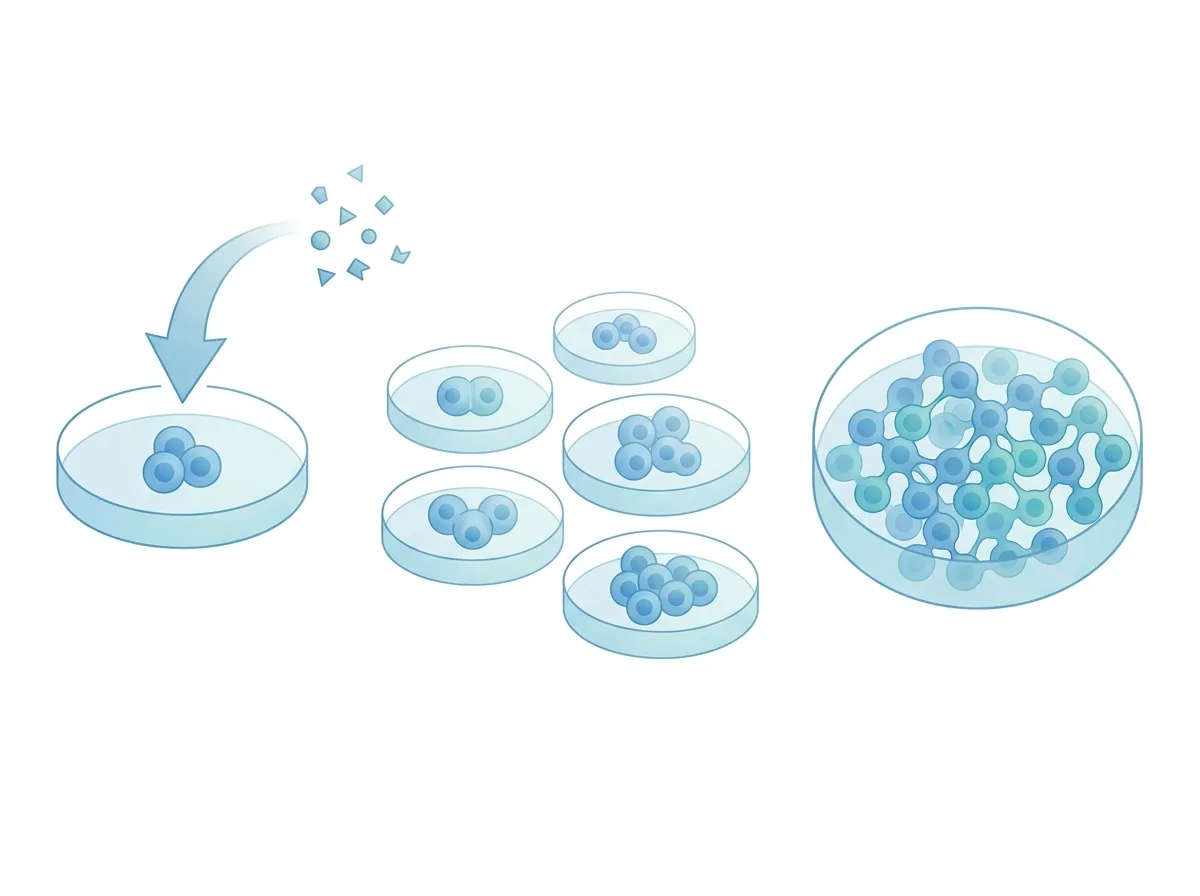
Within research settings, IGF-1 LR3 is studied and used primarily because it provides sustained, IGFBP-resistant IGF-1R stimulation. Several broad research areas recur in the literature and in supplier technical documentation.
- Cell proliferation and survival studies. IGF-1R signalling is a well-characterised driver of proliferative and anti-apoptotic responses in many cell types. IGF-1 LR3 is used to interrogate these pathways under conditions where consistent, prolonged receptor activation is desired, allowing investigators to study dose-response relationships and downstream signalling without the confounding decay introduced by IGFBP capture.
- Differentiation models. The IGF axis participates in differentiation programmes in several lineages, including myogenic and osteogenic systems. Researchers use the analogue to examine how sustained IGF-1R input influences commitment, maturation, and the expression of lineage markers in cultured cells.
- Muscle and tissue-growth model systems. Because the IGF axis is central to skeletal-muscle hypertrophy and tissue growth biology, the analogue appears in model systems exploring hypertrophic signalling, protein-synthesis pathways, and regeneration in vitro and in animal model research. These are mechanistic investigations, not human applications.
- Cell-culture supplementation and bioproduction. One of the most practical uses is as a defined growth-factor supplement in cell-culture media. In bioproduction and serum-reduction work, IGF-1 LR3 is sometimes substituted for insulin or native IGF-1 at low concentrations to support cell growth and viability, taking advantage of its stability and resistance to binding-protein-mediated loss to maintain consistent signalling across longer culture intervals.
Across all of these areas the value proposition is the same: a reagent that delivers durable, reproducible IGF-1R activation in vitro, which can simplify experimental design and improve run-to-run consistency relative to native IGF-1 in IGFBP-containing systems.
IGF-1 LR3 Compared With Native IGF-1 and Other Growth Factors
Set against native IGF-1, IGF-1 LR3 shares receptor specificity but differs in availability. Native IGF-1 is the physiological ligand, tightly regulated by its binding-protein system; that regulation is biologically important but, in a culture dish, often manifests as a shorter and more variable signalling window. IGF-1 LR3 trades that physiological regulation for experimental durability, which is exactly why it is favoured as a reagent. It is the wrong tool if the goal is to study IGFBP-dependent regulation itself, and the right tool if the goal is to maximise and sustain raw IGF-1R signalling.
Relative to the simpler [Arg3]-IGF-1, the additional N-terminal extension in the “Long” form contributes extra steric hindrance to IGFBP binding, generally yielding even greater binding-protein resistance. Relative to insulin, which is sometimes used as an inexpensive culture supplement that can engage IGF-1R weakly at high concentration, IGF-1 LR3 is a far more potent and specific IGF-1R agonist at much lower working concentrations.
It is also worth distinguishing IGF-1 LR3 from unrelated growth factors that supplier catalogues sometimes group nearby. Agents such as growth-hormone secretagogues act upstream by stimulating endogenous growth-hormone release, which in turn influences IGF-1 production; they do not directly bind IGF-1R. Readers comparing categories may find the broader context in our growth hormone secretagogues guide useful, with the caution that those mechanisms are entirely separate from the direct receptor agonism described here.
What the Literature Does NOT Establish
The strength of IGF-1 LR3 as a research reagent is precisely what makes overreach tempting, so the limits deserve explicit statement.
- Potent in-culture signalling is not evidence of safe or beneficial human use. Demonstrating that a molecule drives IGF-1R signalling in a dish says nothing about safety, tolerability, or benefit in an intact organism. The IGF axis is connected to growth, metabolism, and proliferative biology in ways that make unsupervised stimulation a serious concern rather than an advantage.
- No established human dose exists. Because IGF-1 LR3 is a research reagent and not an approved therapeutic, there is no validated human dosing, no clinical safety profile, and no recognised therapeutic indication. Any number presented as a “dose” should be treated as unsupported.
- Escaping IGFBP regulation removes a physiological safeguard. The binding-protein system that the analogue is engineered to evade exists in part to constrain IGF-1 activity. Bypassing it is useful experimentally but is not a feature that translates into a desirable in vivo property.
- It is a reagent, full stop. The compound is characterised for laboratory performance. Claims of human ergogenic, anti-ageing, or therapeutic effect are not supported by the reagent-grade literature and fall outside the scope of legitimate research use.
Handling, Reconstitution, and Stability
IGF-1 LR3 is typically supplied as a lyophilised powder and should be stored cold and desiccated until use; suppliers generally specify refrigerated or frozen storage of the unopened lyophilisate. Reconstitution practice for IGF-1-family proteins commonly begins by dissolving the powder in a small volume of a mildly acidic diluent, such as dilute acetic acid, in which the protein is well solubilised, and then diluting that stock into a buffer or culture medium appropriate to the experiment. The exact diluent and concentration should follow the documentation that accompanies the specific lot rather than a generic assumption.
As a recombinant protein, IGF-1 LR3 is sensitive to repeated freeze-thaw cycling, which can promote aggregation and loss of activity. Preparing single-use aliquots of the reconstituted stock and storing them appropriately helps preserve integrity and reproducibility across an experimental series. Carrier protein is sometimes added to dilute working solutions to reduce adsorptive loss to container surfaces, again following lot-specific guidance. Avoid vigorous agitation, minimise warm holding times, and protect prepared solutions from unnecessary temperature excursions. For arithmetic around stock concentration, working volume, and final assay concentration, our peptide reconstitution calculator guide walks through the calculations in detail so that working dilutions are documented and repeatable.
Verifying Purity and Identity
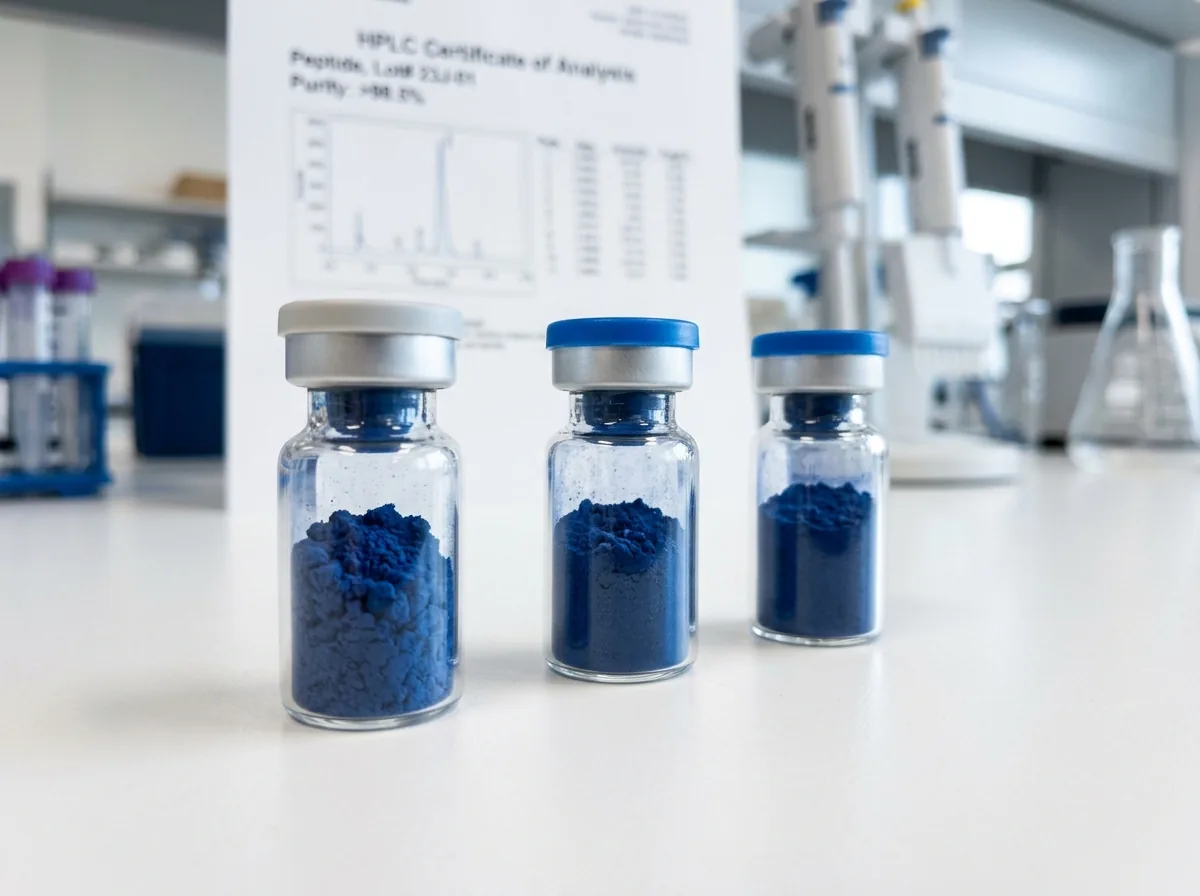
Because biological-activity interpretation depends entirely on knowing what is in the vial, independent verification is part of responsible reagent handling. A per-lot certificate of analysis (COA) should accompany the material and report identity and purity from orthogonal methods, with high-performance liquid chromatography (HPLC) the standard tool for assessing chromatographic purity and mass spectrometry the standard tool for confirming identity by molecular weight. Reviewing these documents before an experiment lets a researcher catch impurities, truncations, or misidentification that would otherwise be attributed to biology.
Our published testing for this and other catalogue items is available on the lab results page, and the Janoshik match-batch resource lets you confirm that the analytical report you are reading corresponds to the specific lot in hand rather than a representative sample. For readers less familiar with interpreting these documents, our how to read a peptide COA walkthrough explains what each section of a third-party report means and which figures to scrutinise. Treating purity and identity as data to be verified rather than assumed is one of the clearest dividing lines between rigorous and careless reagent use.
Frequently Asked Questions
Why is IGF-1 LR3 used in cell culture instead of native IGF-1?
Because it resists capture by IGF-binding proteins. In culture media containing serum or in systems where cells secrete their own IGFBPs, native IGF-1 is partly sequestered and its signalling decays. IGF-1 LR3 largely escapes that sequestration, providing more sustained and reproducible IGF-1R activation, which simplifies experimental design and improves consistency across longer culture intervals.
How does IGF-1 LR3 differ from native IGF-1 at the sequence level?
Two changes. Native IGF-1 is 70 amino acids; IGF-1 LR3 is 83. The analogue carries an arginine in place of glutamic acid at position 3 of the IGF-1 core, and it adds a 13-residue N-terminal extension. Both modifications reduce IGFBP binding, which is the source of its longer functional persistence and higher apparent in vitro potency.
Does higher in vitro potency mean a tighter grip on the receptor?
Not primarily. The increased apparent potency in IGFBP-containing systems comes mainly from avoiding binding-protein sequestration, leaving more ligand free to engage IGF-1R, rather than from a dramatically higher intrinsic affinity for the receptor itself. In an IGFBP-free system the difference from native IGF-1 narrows considerably.
Is there a safe research dose or human dose?
No human dose is established. IGF-1 LR3 is a research reagent with no clinical safety profile and no approved indication. In a laboratory, working concentrations are defined empirically for a given assay and cell system, documented per experiment, and reported in molar or mass-per-volume terms for that system only. None of this constitutes a human dosing recommendation.
How should identity and purity be confirmed before use?
Review the per-lot COA, which should report HPLC purity and mass-spectrometric identity, and confirm that the report matches the specific lot you received. Independent, lot-specific verification prevents misattributing impurity- or identity-related artefacts to genuine biological effects.
Summary
IGF-1 LR3 is an 83-amino-acid recombinant analogue of IGF-1 carrying an arginine-for-glutamic-acid substitution at position 3 and a 13-residue N-terminal extension. Those two engineered changes sharply reduce its affinity for IGF-binding proteins, which is the mechanistic root of its longer functional persistence and its higher apparent potency in IGFBP-containing in vitro systems. It signals through the same IGF-1R as native IGF-1 and drives the same PI3K/Akt and Ras/MAPK cascades, but it does so for longer because less of it is sequestered. These properties make it a useful, reproducible reagent for proliferation, differentiation, muscle- and tissue-growth model, and cell-culture supplementation research. They do not make it a therapeutic: there is no established human dose, no clinical safety profile, and no approved use, and potent activity in a dish is not evidence of benefit in an organism. Used as intended, with cold storage, careful reconstitution, freeze-thaw avoidance, and lot-specific HPLC and COA verification, IGF-1 LR3 is a well-characterised research-use-only growth-factor analogue whose value lies in the consistency and durability of the receptor signalling it provides.