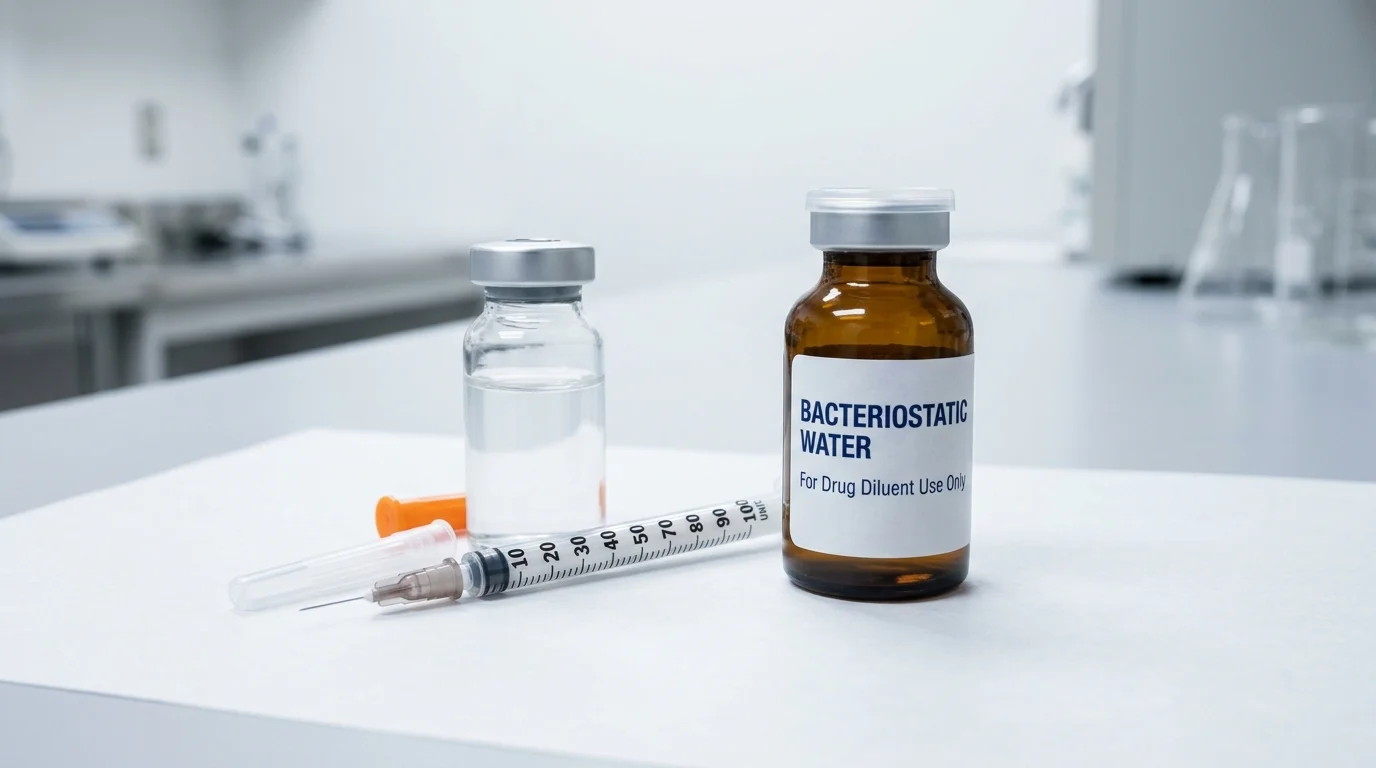
If you have ever stared at a vial of research peptide and a bottle of bacteriostatic water trying to work out how much liquid to draw, you are not alone. The peptide reconstitution calculator below does the math for you: enter the peptide amount per vial, how much bacteriostatic water you added, and your target dose, and it instantly returns the concentration, the draw volume, and the exact syringe units to pull. This tool is built for research and laboratory use only. It is not medical advice, and it does not replace a protocol from a qualified researcher or institution.
Reconstitution Calculator
Calculations update as you type. Nothing is sent anywhere. This runs entirely in your browser.
How to use the calculator
- Check the vial label or Certificate of Analysis (COA) for the exact peptide amount in milligrams. If you have not verified the COA yet, see our guide on how to verify a peptide COA first. The calculator is only as accurate as the number you feed it.
- Enter how much bacteriostatic water you drew into the vial. The three preset buttons cover the most common volumes, but you can type any amount.
- Enter your target dose and pick mcg or mg. Most research protocols are written in micrograms.
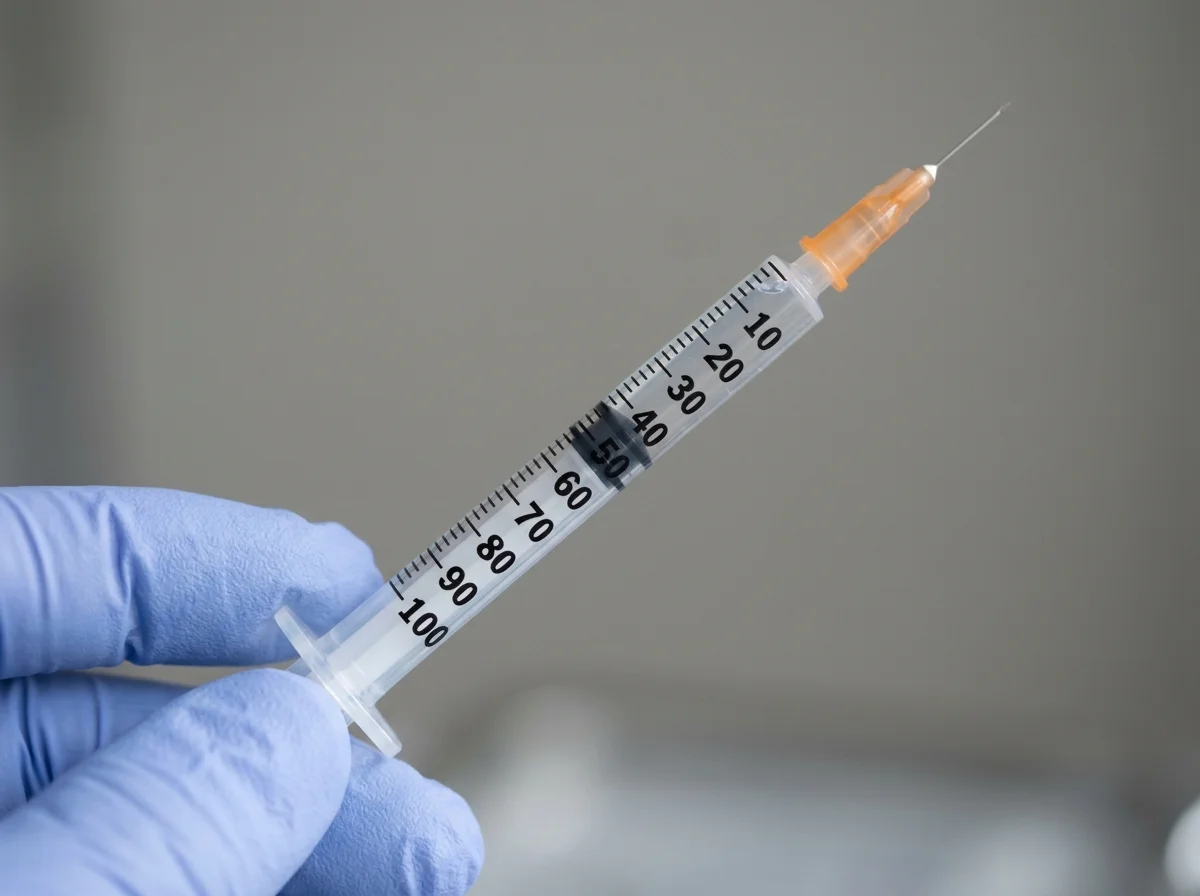
- Choose your syringe type. Most people reconstituting peptides use a U-100 insulin syringe, where the barrel is marked in 100 units per mL.
- Read the four results: concentration, draw volume in mL, the unit mark to pull to on your syringe, and how many total doses the vial holds at that dilution.
The math behind reconstitution
Reconstitution math is really just unit conversion, but it is easy to make a small error that throws off every dose after it. Here is the actual formula the calculator runs:
- Concentration (mcg/mL) = (peptide in vial, mg × 1000) ÷ bacteriostatic water added (mL)
- Draw volume (mL) = target dose (mcg) ÷ concentration (mcg/mL)
- Syringe units = draw volume (mL) × 100 for a U-100 syringe, or × 40 for a U-40 syringe
- Doses per vial = (peptide in vial, mg × 1000) ÷ target dose (mcg)
Every mistake in this process traces back to one of two things: a wrong input, or a wrong syringe scale. A U-40 syringe read as a U-100 syringe will make you draw two and a half times too much volume, which is exactly why the calculator asks you to pick your syringe type rather than assuming one.
Worked example
Say you have a 5 mg vial and you add 2 mL of bacteriostatic water. That gives a concentration of (5 × 1000) ÷ 2 = 2,500 mcg/mL. If your target dose is 250 mcg, the draw volume is 250 ÷ 2,500 = 0.1 mL. On a U-100 syringe, that is 10 units. The vial holds (5 × 1000) ÷ 250 = 20 doses at that dilution. Plug those same three numbers into the calculator above and you should see exactly those results. That’s a good way to confirm you’re reading your own syringe correctly before you rely on it.
Common reconstitution mistakes
- Mixing up mg and mcg. A vial is almost always labeled in milligrams, but doses are usually written in micrograms. Forgetting the 1,000x conversion is the single most common error we see referenced in research forums.
- Misreading a U-40 syringe as a U-100. They look similar at a glance but the unit markings mean completely different volumes.
- Guessing the water volume instead of measuring it. “About 2 mL” is not 2 mL. Draw the bacteriostatic water with the same syringe you would use for dosing, so you know exactly what you added.
- Trusting an unverified vial amount. The calculator cannot correct for a vial that does not actually contain what the label says. That is the one limitation worth being honest about here — math on a wrong number just produces a precise-looking wrong answer. A COA from an ISO-accredited lab is what actually backs up the “5 mg” on the label.
- Recalculating from memory for every new vial size. Vial sizes vary by supplier and by peptide. Re-run the numbers each time rather than reusing a dose-to-units ratio from a different vial.
Storing a reconstituted vial
Once bacteriostatic water is added, most peptides are far less stable at room temperature than they were as a lyophilized (freeze-dried) powder. Standard practice in the research community is refrigeration at roughly 2–8°C, away from light, and use within the timeframe noted on the supplier’s documentation for that specific peptide. Do not freeze a reconstituted vial — freeze-thaw cycles can degrade peptide structure. Label the vial with the reconstitution date so you are not guessing later.
Frequently asked questions
Is this calculator giving me medical dosing advice?
No. It performs a unit conversion based on numbers you enter. It has no knowledge of your research protocol, your peptide, or your goals, and nothing here should be read as a recommendation for human use.
What bacteriostatic water volume should I use?
That depends on your target dose, your syringe, and your own preference for how concentrated the solution ends up. Smaller water volumes give you a more concentrated solution and smaller draw volumes; larger volumes make small doses easier to measure accurately on a syringe.
Why does the calculator warn me sometimes?
It flags two situations: a dose that would need more liquid than the whole reconstituted vial contains, and a draw volume so small it would be hard to measure precisely on a standard syringe. Both usually mean it is worth adding more water or rechecking your inputs.
Do U-100 and U-40 syringes really matter that much?
Yes. A U-100 syringe marks 100 units to a full mL; a U-40 syringe marks only 40 units to that same mL. Drawing to “20 units” means a completely different volume depending on which syringe is in your hand.
Can I use this for any peptide?
The math is generic unit conversion, so it works the same way regardless of which peptide is in the vial. What changes between peptides is stability, recommended storage, and typical research dosing ranges — none of which this tool tries to guess for you.
Where can I double-check unfamiliar terms?
Our peptide glossary covers reconstitution-related terms like lyophilized, bacteriostatic water, and COA in plain language.
How do I know the vial amount I am entering is accurate?
Check the batch-specific Certificate of Analysis rather than trusting the label alone. Our COA verification guide and editorial standards page explain what to look for and why we test the way we do.