Research use only. For in vitro laboratory applications. Not for human consumption.
Overview
Two of the most studied synthetic peptides in contemporary research are TB-500 (the synthetic fragment of Thymosin Beta-4) and BPC-157 (Body Protection Compound-157). While both appear in overlapping research contexts, they are structurally distinct and operate through different molecular pathways. This comparison is intended to help researchers select the appropriate compound for their experimental design.
Quick Comparison
| Parameter | TB-500 | BPC-157 |
|---|---|---|
| Origin | Fragment of Thymosin Beta-4 (Ac-SDKP) | Derived from human gastric juice protein |
| Sequence length | 17 amino acids (fragment) | 15 amino acids |
| Molecular weight | ~2,007 Da | ~1,419 Da |
| Primary research focus | Actin binding, angiogenesis, stem cell migration | Cytoprotection, nitric oxide, growth factor signaling |
| Cell types studied | Endothelial, cardiac, satellite cells | Gastrointestinal, tendon fibroblasts, neural |
| PubMed indexed studies | 100+ | 200+ |
| Purity (Bastion) | >99% | >99% |
TB-500 — Mechanism and Research Applications
TB-500 is the synthetic analogue of the Ac-SDKP fragment of Thymosin Beta-4 (Tβ4), a ubiquitous 43-amino-acid protein involved in actin dynamics. The active fragment is responsible for many of Tβ4’s documented cellular effects.
Key documented mechanisms in vitro:
- Actin sequestration: TB-500 binds G-actin, modulating cytoskeletal reorganization — relevant to cell migration studies.
- Angiogenic signaling: Documented upregulation of MMP-2 and stimulation of endothelial cell migration in scratch assay models.
- Anti-inflammatory pathways: NF-κB pathway modulation documented in macrophage cell culture studies.
- Stem cell mobilization: Research on cardiac progenitor cell mobilization in animal models (Sopko et al.).
BPC-157 — Mechanism and Research Applications
BPC-157 operates through distinct pathways, with its primary research focus on gastrointestinal cytoprotection and nitric oxide system modulation.
- FAK-paxillin pathway: Documented effects on focal adhesion kinase signaling relevant to tendon fibroblast research.
- VEGF upregulation: Documented in multiple cell culture models.
- NO pathway: Modulation of nitric oxide synthase activity in endothelial cell studies.
- Cytoprotection: Protective effects in gastrointestinal epithelial cell models.
Choosing Between TB-500 and BPC-157 for Your Research
- Actin dynamics / cytoskeletal research: TB-500
- Angiogenesis and endothelial migration assays: TB-500
- Gastrointestinal cell protection models: BPC-157
- Tendon / ligament fibroblast studies: BPC-157
- Combined vascular + cytoprotective studies: Both compounds — the BPC-157 + TB-500 Combo vial is available for multi-pathway experimental designs.
Reconstitution and Storage
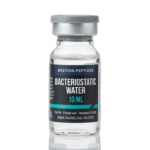
Both peptides are supplied lyophilized and reconstituted with bacteriostatic water. Standard protocol: dissolve in bac water at 1mg/mL, store at 4°C, discard after 28 days. See our full reconstitution guide.
Disclaimer: All products are for in vitro research and laboratory use only. Not for human or animal consumption. Not FDA-approved for therapeutic use.