Research use only. For in vitro laboratory applications. Not for human consumption.
What Is BPC-157?
BPC-157 (Body Protection Compound-157) is a synthetic pentadecapeptide derived from a protective protein found in human gastric juice. With the sequence Gly-Glu-Pro-Pro-Pro-Gly-Lys-Pro-Ala-Asp-Asp-Ala-Gly-Leu-Val, it consists of 15 amino acids and has a molecular weight of approximately 1,419 Da.
It has been the subject of substantial in vitro and animal model research since the 1990s, primarily published in journals including the Journal of Physiology-Paris, Current Pharmaceutical Design, and Biomedicines.
Mechanism of Action
BPC-157 has been studied across several molecular pathways in laboratory settings:
- Nitric oxide pathway modulation: Research suggests BPC-157 may interact with the NO system, which plays a role in vascular biology and cellular signaling.
- Growth factor expression: Multiple studies have documented upregulation of VEGF (vascular endothelial growth factor) and EGF (epidermal growth factor) receptor expression in cell culture models.
- Cytoprotective properties: BPC-157 has demonstrated cytoprotective effects in various gastrointestinal cell models, a property linked to its gastric origin.
- FAK-paxillin pathway: Research by Sikiric et al. has documented BPC-157’s interaction with the focal adhesion kinase (FAK) signaling pathway, relevant to cell migration studies.
Published Research Highlights
Key peer-reviewed studies available via PubMed include:
- Sikiric et al. (2018) — “Brain-gut Axis and Pentadecapeptide BPC 157: Theoretical and Practical Implications” in Current Neuropharmacology
- Chang et al. (2011) — Studies on tendon and ligament fibroblast cell cultures with BPC-157 application
- Klicek et al. (2019) — Research on gastrointestinal cytoprotective mechanisms
Researchers can search PubMed for “BPC-157” or “pentadecapeptide BPC” to access the full literature base (200+ indexed publications).
Laboratory Specifications
| Parameter | Value |
|---|---|
| Sequence | Gly-Glu-Pro-Pro-Pro-Gly-Lys-Pro-Ala-Asp-Asp-Ala-Gly-Leu-Val |
| Molecular Formula | C₆₂H₉₈N₁₆O₂₂ |
| Molecular Weight | ~1,419 Da |
| CAS Number | 137525-51-0 |
| Purity (Bastion) | >99% (HPLC verified) |
| Format | Lyophilized powder |
| Storage | -20°C (lyophilized); 4°C after reconstitution, use within 28 days |
Reconstitution Protocol
For laboratory use, standard reconstitution of lyophilized BPC-157:
- Allow the vial to reach room temperature (~10 minutes) to avoid condensation affecting the lyophilized powder.
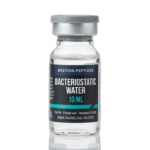
- Using a sterile syringe, add bacteriostatic water (0.9% benzyl alcohol preserved) slowly along the interior vial wall.
- Swirl gently — do not vortex or shake vigorously.
- Standard working concentration: 1mg/mL (dissolve 5mg in 5mL bac water).
- Aliquot if multiple experiments are planned to avoid freeze-thaw cycles.
- Store reconstituted solution at 4°C. Discard after 28 days.
Available Formats
Bastion Peptides supplies BPC-157 in two concentrations for different research scales:
BPC-157 5mg — Standard research vial | BPC-157 10mg — High-concentration vial for extended studies
Disclaimer: All products are for in vitro research and laboratory use only. Not for human or animal consumption. Not FDA-approved for therapeutic use.