CJC-1295 is a synthetic growth hormone-releasing hormone (GHRH) analog used in research focused on somatotropic axis regulation, GH secretion dynamics, and metabolic signaling. This overview covers its pharmacology, published findings, and laboratory specifications for qualified researchers.
What Is CJC-1295?
CJC-1295 is a 30-amino acid peptide analog of endogenous GHRH(1-29). The key modification is the substitution of Ala at position 2 with D-Ala, conferring resistance to dipeptidyl peptidase IV (DPP-IV) cleavage — the primary inactivation pathway for native GHRH. Two variants are studied in the literature: CJC-1295 without DAC (Drug Affinity Complex), which mimics the pulsatile GH release pattern of native GHRH with a half-life of approximately 30 minutes, and CJC-1295 with DAC, which incorporates a maleimido-propionamide reactive group that covalently binds to plasma albumin, extending half-life to 6–8 days and producing sustained GH elevation.
Mechanism of Action
CJC-1295 binds the GHRH receptor (GHRHR) on pituitary somatotroph cells, a Gαs-coupled receptor that stimulates adenylyl cyclase and elevates intracellular cAMP. This cascade activates protein kinase A, promoting GH gene transcription and subsequent GH secretion. In research models, the no-DAC variant elicits sharp, physiologically patterned GH pulses, while the DAC variant produces sustained baseline elevation of IGF-1 and GH in rodent and primate models. The no-DAC form is frequently co-administered with GHRP compounds (such as Ipamorelin) in preclinical studies to investigate synergistic effects on the somatotropic axis.
Published Research Highlights
Teichman et al. (JCEM 2006) conducted the pivotal human pharmacokinetic study characterizing CJC-1295 with DAC, demonstrating sustained GH and IGF-1 elevations for up to 28 days following a single injection in healthy adults. Multiple preclinical studies have used CJC-1295 (no DAC) to model pulsatile GH secretion in rodents with GHRH receptor knockouts. Research into GH axis involvement in sarcopenia, lipid metabolism, and wound healing has cited CJC-1295 variants as useful pharmacological tools for controlled GH axis stimulation. Studies pairing CJC-1295 with selective GHRPs have contributed to understanding synergistic GH secretagogue interactions.
Research Use Only. CJC-1295 is supplied by Bastion Peptides strictly for in vitro and laboratory research purposes. Not for human or veterinary use. Not intended for consumption or therapeutic application.
Laboratory Specifications
| Parameter | CJC-1295 No DAC | CJC-1295 With DAC |
|---|---|---|
| Molecular Formula | C₁₅₂H₂₅₂N₄₄O₄₂ | C₁₆₅H₂₆₉N₄₇O₄₆S |
| Molecular Weight | 3,367.97 Da | 3,647.28 Da |
| Half-life (research) | ~30 minutes | ~6–8 days |
| Purity | ≥99% (HPLC verified) | ≥99% (HPLC verified) |
| Third-Party COA | Janoshik Analytical | Janoshik Analytical |
| Storage | −20°C lyophilized; 4°C in solution | −20°C lyophilized; 4°C in solution |
| Appearance | White lyophilized powder | White lyophilized powder |
Reconstitution Protocol
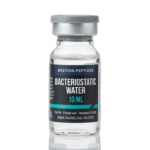
Reconstitute with bacteriostatic water (BW) by adding BW gently along the vial wall. Swirl gently until fully dissolved — do not shake or vortex. Standard research concentrations for the no-DAC variant range from 1–2 mg/mL; DAC variant concentrations typically range from 0.5–1 mg/mL given longer inter-dose intervals. Aliquot into single-use volumes to minimize freeze-thaw cycles. Store reconstituted solution at 2–8°C; use within 14 days for optimal integrity. Bacteriostatic Water (10 mL) is available from Bastion Peptides.
Available Formats
Bastion Peptides stocks both CJC-1295 without DAC and CJC-1295 with DAC as lyophilized research compounds, each batch HPLC verified to ≥99% purity with Janoshik COA. View current vial formats and inventory in the shop.
For research use only. This compound is not approved for human therapeutic use. Researchers are responsible for compliance with all applicable local regulations governing research compound procurement and use.